Neural Circuits and Brainstem Control of Lower Urinary Tract Function
project - identifying SPINAL CORD neuronal populations INVOLVED IN LOWER URINARY TRACT FUNCTION
Effective control of lower urinary tract (LUT) function requires precise coordination between the somatic and autonomic nervous systems. Although the sacral spinal cord segments (S1-S4) are known to play a crucial role in bladder control, the specific neuronal populations and circuits remain poorly understood. This knowledge gap has limited the development of targeted therapies for bladder dysfunction, which is a common feature of many neurological diseases, including Parkinson’s disease, Multiple System Atrophy, stroke, and Multiple Sclerosis.
Recent advances in single-nucleus RNA sequencing and spatial transcriptomics have opened new avenues for studying the mouse and human spinal cord. We are leveraging these tools to characterize the molecular identities of cells within S1-S4, identify candidate neuronal subpopulations involved in LUT control, and map their spatial organization. By building a detailed reference of the neurons and circuits involved, we aim to lay the groundwork for new therapeutic approaches to LUT dysfunction and to bridge the gap between molecular neuroscience and clinical neuro-urology, advancing treatment options for individuals affected by these conditions.
>> This application aims to reveal neurons and other cells in the lumbosacral spinal cord that play functional roles in controlling the lower urinary tract. <<
- Funding and collaboration on this project: NIH-NIDDK DK125708 (Verstegen), NIH-NIDDK RDK142807A (Verstegen), SNSF P500PB_206880 (Sartori), and AUA Urology Care Foundation Research Scholar award to 1449517 (Sartori).

Crossing the TRAP2 mouse line to the H2B-Trap line allows for nuclear labeling following strong neuronal activation.
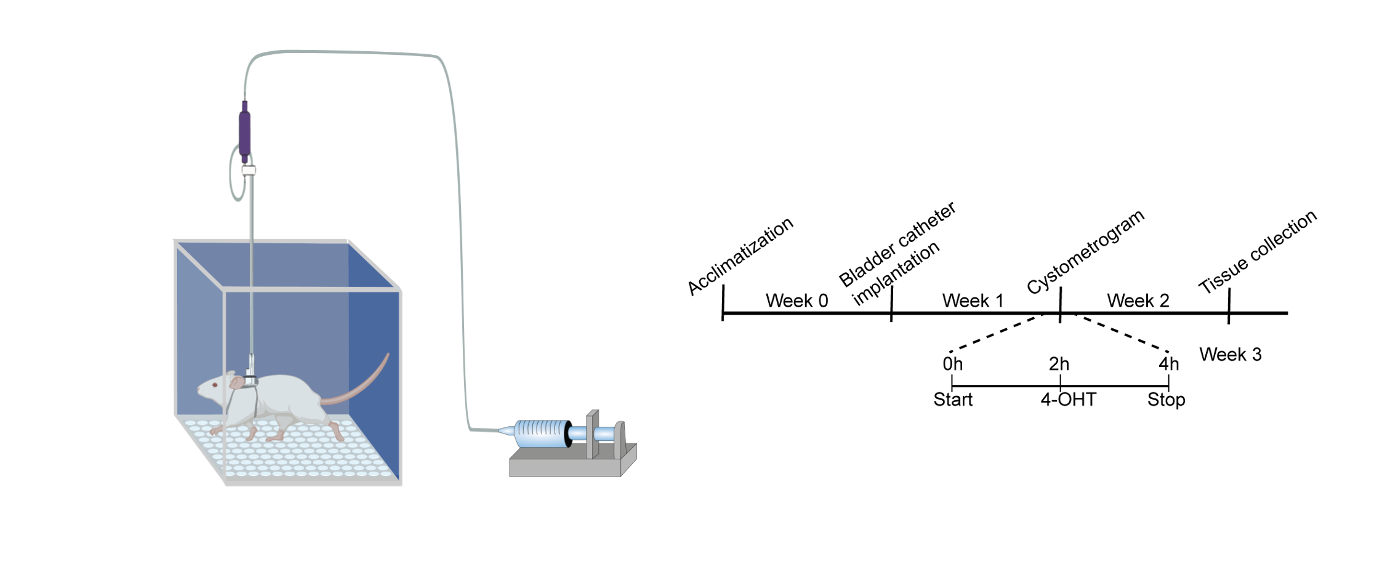
Technique for labeling neurons that are activated during lower urinary tract function.
Useful references on the spinal cord and RNA sequencing:
1) Fiederling et al., 2021 - Tools for efficient analysis of neurons in a 3D reference atlas of whole mouse spinal cord (PMCID: PMC8516137).
2) Alkalasi et al., 2021 - Single nucleus RNA-sequencing defines unexpected diversity of cholinergic neuron types in the adult mouse spinal cord (PMCID: PMC8087807)
3) Sahyamurthy et al., 2018 - Massively Parallel Single Nucleus Transcriptional Profiling Defines Spinal Cord Neurons and Their Activity during Behavior (PMCID: PMC5849084)
In collaboration with:

Other exciting news:
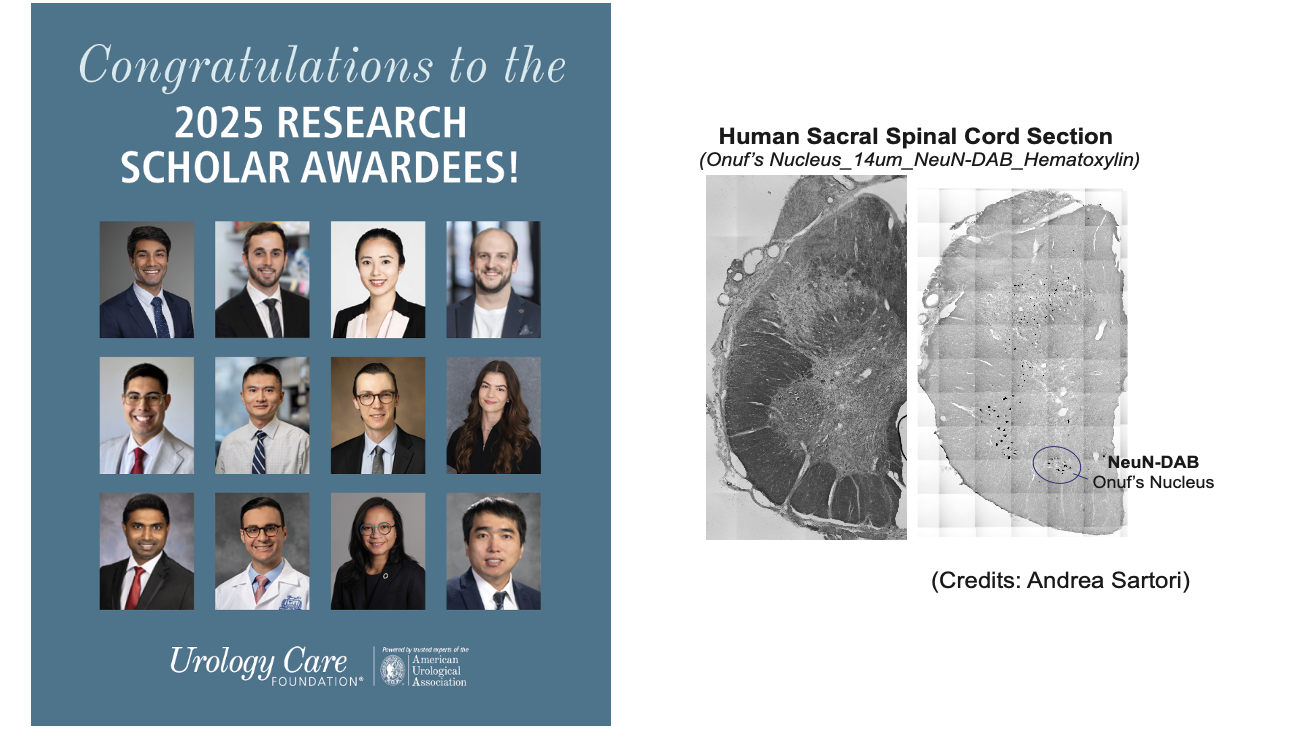
Dr. Sartori wins 2025 Urology Care Foundation Research Scholar Award
“To investigate which neuron types are evolutionarily conserved between mice and human - to facilitate the identification of novel therapeutic targets. With this prestigious award of the American Urology Association, we will aim to characterize the cell types in the human sacral spinal cord, focusing on the neurons involved in lower urinary tract function. “